operation 'legacy'

  The Friends Of The Suffolk Regiment
  • Introduction
  • History
    • Our Regimental 'Family'
  • Publications
  • Archives
    • Operation 'Legacy'
    • Friends News Archives
    • Battlefield Tours
  • Join Us
  • Friends News
  • Contact

"No Troops Could Have Done Better And I Am Sure That Their Advance In This Battle Will Go Down To Posterity As One Of The Most Gallant Actions Of The War"

28/7/2016

 
Picture
Towards the end of July, a draft of 13 officers and 530 other ranks arrived at the 11th Battalion from other units to bring it back up to strength following its losses on the 1st July.
At the same time, the second-in-command, Major Farquhar, received promotion and the command of a battalion of the Northumberland Fusiliers, and departed on the 6th July. In his place, Captain G.L.J. Tuck took over the role of 2IC and relinquished his post as Adjutant, being replaced by 2/Lieutenant W.H. Parker.
The morale of the Battalion was greatly shattered by the appalling losses of 1st July, but as the days passed, and other units stepped up to the mark to continue what they had started, the men's opinions of their actions changed. Feelings of deep defeat, gave way to feelings of immense pride in the actions they had completed.
As he vacated his position as Adjutant, Captain Tuck circulated the messages he had received following their actions on the first day. Brigadier-General R.C. Gore commanding 101 Brigade wrote to Colonel Somerset; "Will you please express to your Battalion my admiration for their gallant conduct in the attack on July 1st. Theirs was the hardest task of any, having the farthest to advance before crossing our own front line in the face of deadly fire, their courage was magnificent as in spite of wave after wave being mown down, they fearlessly pressed forward towards their objective and got well into the German line but unfortunately their numbers were too few in the end to gain it. No troops could have done better and I am sure that there advance in this battle will go down to posterity as one of the most gallant actions of the War." 

"But None Certainly Have A Finer Record Than The Suffolks"

26/7/2016

 
Picture
Daily, the casualties list published in the Times continued to grow.
In the four weeks since 1st July, the Suffolk Regiment had lost 684 men in action. No fewer than six Battalions had fought in the battles of the Somme; a battle that was still ongoing. These losses cut through every walk of life, every class of society. Cricketers, former public shoolboys, underage territorials, bakers, brickworker's and fenland ice skaters all fell in the face of the enemy.
Amidst the endless lists of the fallen, came praise for the Regiment and the gallantry of its men in action from a reporter at the front. A paragraph in the Times on July 26th, ran; "Mention ought also to be made, in another connexion, of the Suffolks. These I have spoken of before, and of the heroism which they showed at a critical moment in another stage of this battle. it would be absurd, in such splendid fighting as has been done here, to say that any one Regiment or Class of troops has done better than any other. It has been a matter of opportunity only, but none certainly have a finer record than the Suffolks." 
The accolade was greatly appreciated by all who saw it reprinted in the Regimental Gazette of  July/August 1916, but there was still a long way to go in defeating the enemy. The battle would continue.

Pont Street To Delville Wood

20/7/2016

 
Picture
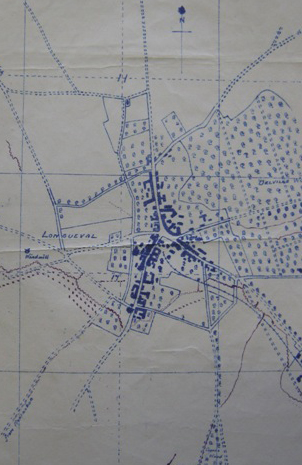
At 3.00am on the 20th July 1916, elements of 2nd Suffolk assembled in "Pont Street" in the westernmost cross-roads of the village of Longueval. From here, they would shortly attack towards the imposing natural fortress of Delville Wood.
The planned artillery bombardment; the precursor to the main attack, lifted at 3.35am after some 15 minutes of continuous fire. In the darkness, 2nd Suffolk mounted the parapet and set off into the village of Longueval.
In the darkness and with a thick mist, the men had difficulty in spreading out to attain their required formation. In the confusion, caused by struggling over the rocky ground of the bombed out village, the left hand arm of the attack began to veer off course to the north and soon came the sound of the dreaded deadly Maxim machine-guns from positions just inside the wood. Those in the the reserve and support Company's could only imagine what was unfolding in the darkness ahead of them, and no-one knew that the advance was gradually slowing down.
As reports came in from the wounded, they created the impression that all was going to plan. Prisoners, now arriving steadily, spoke of the first waves being in the wood. Might there just be some success here? 
Out in front however, it was a different story. Heavy concealed machine guns in the village were wreaking a terrible toll on the Battalion and such were the mounting casualties, that news had ceased to be received back at Battalion HQ. No news, was definitely not good news.
At around 4.00am, 2/Lieutenant Johnson, went out on the left flank to see what the situation was. Desperate not to get caught in the open as the dawn was breaking, he spotted that there was a heavy enemy machine-gun nest at a wrecked road junction between "Duke Street" that ran east to west, and "Piccadilly" that ran north to south. The majority of the men in the opening waves had fallen to this gun which caught them in the rubble between the wood and the main junction un the village. As dawn broke, any movement in the open was impossible without unnecessary casualties being inflicted. Those who could went to ground in the rubble and started to dig a consolidation trench along "Duke Street" with what remained of Z and W Company's.
Using rifle bombers available to them, 2/Lieutenant Johnson, and his fellow subaltern, 2/Lieutenant Platts, tried in vain to silence the machine gun and in their final attempt, but men were killed in the open yards from it. As the day unfolded, the Germans continuously shelled the Suffolks in the open. "Whizz Bangs" rained down all day, inflicting more casualties on those in the ruins. Unbeknown to the Battalion, the Brigade Major; Major Congreve, had gone forward with the leading Company's of the Battalion that morning and was now in a shell hole in the village. Shortly after lunch, he exposed himself in an attempt to get forward to reconnoitre the situation. A German sniper, near to the machine gun nest killed him in the open.
As the day wore on, the sun got hotter and those in the exposed positions no-mans-land, desperately needed a drink. At 7.00pm, the sniper claimed Lieutenant Kemble. He had been in charge of Z Company that day, and its command was taken over by 2/Lieutenant Wright. Such was the situation that a junior rank had had to assume command for the lack of any other unwounded senior officers.
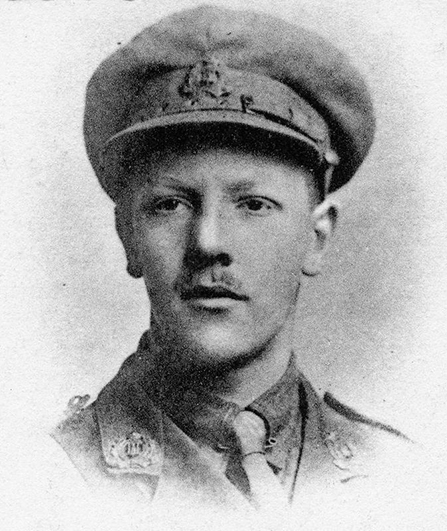
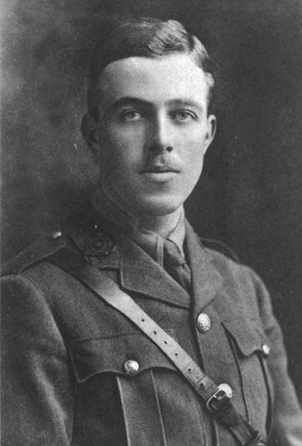
As darkness descended, the D.C.L.I. (Duke of Cornwall's Light Infantry)  arrived to relieve them and under cover of a pitch black night, the Battalion was withdrawn. The following morning, the CO; Major G.C. Stubbs, stood aghast at the losses. Four officers killed, three wounded and six missing, amongst whom was Lieutenant Arthur Leslie Evans of X Company (above). Losses amongst the other ranks numbered over 120.
​It was another black day for 2nd Suffolk.


"He Explained The Situation"

19/7/2016

 
Picture
On 19th July, two company's of 2nd Suffolk were positioned along the ridge which ran in front of the village of Longueval in the southern sector of the Somme battlefield.
Late the previous day, they had moved into position here to relive elements of 1st Gordon Highlanders who had previously occupied the old German front line in this sector. The other two company's of 2nd Suffolk, were stationed slightly to the west in "Caterpillar Valley"
Late in the afternoon, the Germans brought down heavy, concentrated artillery fire in this area, scoring a direct hit on the Adjutant's temporary HQ. Captain & Adjutant H.C.N. Trollope, who was inside, was badly wounded, and two orderly's, Privates Scoggins and Smith were killed.
For Captain Trollope, it was his second wounding. ​ He been badly wounded in action at Bellewaarde in the Ypres salient the previous June, and had only been back with the Battalion for a few months. The wounds he received that day were not too serious, and after he had un-dug himself from the wreckage of his dugout, he walked to the Advanced Dressing Station for treatment.
The two privates killed that day were both holders of gallantry awards. No. 8863, Horace James Scoggins, was a holder of the DCM, and 3/8894, William Brooks Smith, the MM.  No sooner had Trollope evacuated himself, when a second stock landed on the HQ dugout, badly wounding Lieutenant Pickard-Cambridge and killing or wounding six orderly's that were inside. 
At around 8.00pm, a message was received that they were to withdraw the two company's from in front of Longueval village, and pull back to the old British front line, where they would receive orders for an attack the following day.  At 10.30pm, verbal orders were given to the Battalion from the Brigade Major; Major Congreve, who had personally reconnoitred the ground fro the forthcoming attack. By candlelight in the cellar of an old farmhouse, Congreve outlined the plan of attack to all officers and platoon commanders of 2nd Suffolk. He "explained the situation and pointed out the plan of attack."
2nd Suffolk were to clear the village of Longueval and sweep northeast to attack German positions on the northern corner of the wood. Elements of 10th Royal Welsh Fusiliers were holding a straggling line on a track through the wood, running east to west, known as "Princes Street." 2nd Suffolk were to try and link up with them in another track running north to south called "Stand Street" which intersected "Princes Street" about 150 yards into the wood. 
W and Y company's were to be in the first line of the attack. Each Company was to be split into 2 lines of 2 platoons each. A frontage of 140 yards was requested of each Company, which meant that the men would be pretty well bunched up in the initial advance in the open. X Company were in support, travelling in the centre of the advance, and Z Company were in reserve. 
The attack would commence at dawn, so with the conclusion of the briefing, the platoon commanders departed to relay information to their senior NCOs and get what sleep they could. They would be attacking at 3.30 am in the morning in complete darkness, and assembling and organising their men on the battlefield would be an almost impossible task. Would they be able to do it?

From 'Little Italy' To The Somme

15/7/2016

 
Picture
One of those to fall in action at Bazentin with 4th Suffolk, was Corporal Umberto Amedie Motroni.
English by birth but of Italian immigrant parents, "Albert Hubert" Motroni as he was better known, has enlisted into 4th Suffolk in October 1913. He crossed with them to France in November 1914 and was promoted Lance Corporal in May 1915, following the Battalion's actions near La Basse. He was promoted Corporal in March 1916.
Albert was the second of three Motroni sons to fall in action. His older brother Peter, fell in action at Hooge in July 1915 whilst serving with 2nd Suffolk and his younger brother, John, would fall in 1917 whilst serving with the Royal Field Artillery.
Perhaps it was the example of his older brother who had become a regular soldier in 1913, that inspired Albert to enlist. His working for his parents - who had both a successful fruit and vegetable business and a popular ice cream parlour in the town, probably made regular service an impossibility for him, but the Territorial Force was a likely option and the town boasted the HQ Company of the 4th Battalion and the Battalion Band. It was a natural choice.
No. 14 Permit Office Street, Ipswich; home to the already widowed Mrs Motroni, had no sooner gotten over the loss of Peter, when this tragic news was received of Albert. Having lost her husband in late 1914, just after all three sons went to war, the black crepe hung in the window of Carri Motroni's  house for almost two years. Another son of Ipswich's "Little Italy" had been killed in action; another victim of the Great European War.
​

​

"Believed To Be Buried In This Cemetery"

15/7/2016

 
Picture
And so the Battle of the Somme moved on and another Suffolk Battalion were called forward to play their part.
On the night of the 14/15th July, 4th Suffolk, who were then bivouacked between the villages of Fricourt and Mametz, we hurriedly mobilised at dawn and sent forward to support the 1st Middlesex Regiment in their attack against "Switch Trench" which began early in the morning.
Switch Trench ran north-north east above the imposingly dark "High Wood" but to the right of their advance was the enemy held village of Bazentin-Le-Petit. The village was as jet, untaken and from within its heavily wrecked, but strongly fortified farmhouses, the enemy could sweep the open ground to the north and to the east; the land across which 4th Suffolk were to advance. To reach Switch Trench was a pretty tall order.
The attack was made as had become the norm of the battle, in two waves. The first wave; consisting of 'A' and 'B' Company's went over first at around 6.00am, in support of the Middlesex and advanced straight towards the north of the village. The Germans from their commanding position could see the attacking Middlesex and Suffolks and poured forth fire from every angle upon them. 'A' Company on the left flank, went to ground, 'C' Company on the right; closest to village, caught the brunt of the fire. They were cut down in the open.
The second wave; consisting of 'C' and 'D' Company's were retained at the start line by the Battalion Commander; Lieutenant-Colonel hugh Coleman, who saw it as futile to send them over in the face of such fire.
At 8.30am, an artillery barrage was launched against the village. Lasting 30 minutes, a 9.00am, as the dust had barely settled, the second wave went across no-mans-land towards the north. the barrage had had little effect on the defenders of the village, who in seconds, got their machine-guns back into action. A contemporary account recalled; "The advancing force were almost immediately cut down by enfilade fire, machine gun posts spraying cross fire from the direction of High Wood and from positions north west of Bazentin-le-Petit wood as well as strafing fire from Switch Line emplacements. After gallant but hopeless repeated attempts to reach the German trenches and with losses escalating, all attempts at forward movement were abandoned."
It was the Battalion's first real major action since Neuve Chapelle, but the cost was heavy. Four officers killed and ten wounded. One senior NCO killed and three wounded. Losses amongst other ranks were much higher; 36 men killed in action with almost 50 wounded.
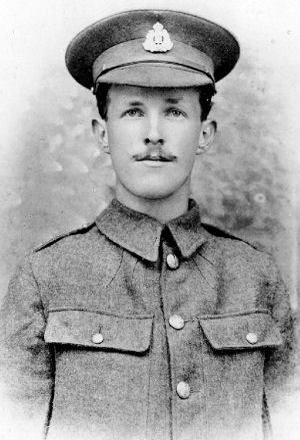
​The town of Ipswich suffered heavily that day including Captain Herbert Kersey Turner (above). Turner was, like his uncle, Major Frederick Turner, a member of the great Ipswich engineering family that owned the firm of E.R. & F Turners. Educated at Oundle school, Turner joined the 1/4th Battalion in March 1911 and went with it to France in November 1914.
Wounded at Neuve Chapelle in March 915 by a gunshot wound to the chest, he was unfit to return to front line service for some time and instead, accepted a position on the East Anglian Munitions Committee. The committee that encompassed the local engineering firms of Ransomes, Sims and Jeffries, Ransomes and Rapiers, E.R.& F Turners, Messrs. Coxedge and Co., and Reavells, was a calling for young Turner who threw himself wholeheartedly into the job, but he was keen to get away from it and get back to the fight. When he was fit enough, he joined the training Battalion of 4th Suffolk in Hertfordshire and went with them to France in June 1916.
Though Turner's body was recovered and buried in the nearby "Flat Iron Copse" cemetery, the grave's marker was subsequently lost in a later battle. Today his headstone is marked "Believed To Be Buried In The Cemetery."

England.....Alias Lynn

9/7/2016

 
Picture
On 8th July 1916, another Battalion of The Suffolk Regiment arrived in the Somme Sector.
The 2nd Battalion was rushed down from the Ypres sector to support the line in the Carnoy area of the battlefront; the southernmost sector of the Somme nearest the French. No sooner had the Battalion arrived and bivouacked in the village than Company Commander; Lieutenant W.G. Chandler was wounded by shrapnel. The battle, though eight days old, was still going on with much bitterness on either side.
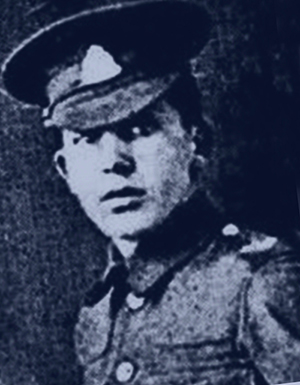
The following evening, patrols of 2nd Suffolk under the command of 2/Lieutenant H.P. Garnham and 2/Lieutenant R.A. Johnson, were sent out in front of the village to establish the strength of the enemy. The Brigade Major; Major Congreve, who had before the war, been in charge of the Army School of Musketry at Hythe, was out in no-mans-land reconnoitring the situation and asked for support in assessing and recording the positions that affronted them. In Lieutenant Garnham’s patrol was Sergeant F. Lynn who was killed as the patrol returned to the Suffolk lines.
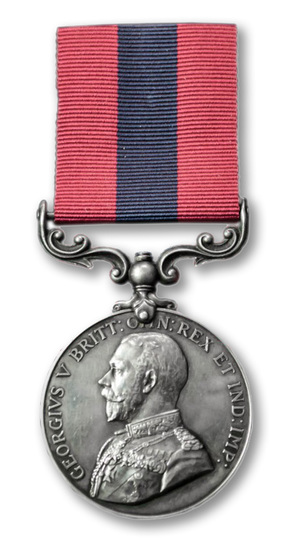
3/9012, Sergeant Frederick Lynn was a Kitchener’s Army man. Most likely one of the first drafts to be sent to the 2nd Battalion in early 1915, when they were detached from the East Surrey’s and made an entire Suffolk Battalion again. In February, he showed great gallantry in command of a bombing party in the Salient when he pressed-on to block a German advance. Though half his section were either killed or wounded, Lynn’s skilful command of his remaining men, ensured that the Germans were kept at bay. For his actions that day, he was awarded the Distinguished Conduct Medal, though due to an oversight of administration, it was not formally announced until March 1916.
Corporal, later Sergeant Frederick Lynn was a pre-war regular soldier though he had left the Army in 1911. When war was declared he enlisted in the Suffolk Regiment and found himself at Felixstowe with the 3rd (Special Reserve) Battalion. He had previously served between 1905 and 1911 in the 3rd Battalion, The Norfolk Regiment.
Lynn was not however Lynn. His real name was Robert John England and his service with The Norfolk Regiment was abruptly ended in November 1911 when he was discharged for striking a superior officer.  He had previously been in trouble many times before for striking other officers, being absent without official leave and for the loss of government property. Clearly England, was not a ‘model’ soldier.
However despite this chequered past, England was like many gripped by patriotic fever, and in a time when men were desperately needed, checks as to genuine names, ages and previous service, were often overlooked. It was perhaps this 'colourful' past that caused England to cross the border and re-enlist in Suffolk under the assumed name of Lynn.
England, or Lynn, was clearly a brave and courageous soldier, who gallantry was above reproach, yet like many, he hated the discipline of the Army life. Maybe The Suffolk Regiment had changed him?

"The Assault Was Brought To A Standstill"

3/7/2016

 
Picture
Following the costly losses of the first day of the Battle of the Somme, the next Battalion of The Suffolk Regiment were called forward to play their part.
7th Suffolk, who had been behind the lines on 1st July, were rushed forward to support trenches early on the morning of 2nd July. Later that afternoon, the Battalion Commander, Major George Henty, received fresh orders that the Battalion would make a frontal attack against the village of Ovillers at 3.15am the following morning.
In the failing light of a pleasant summer evening, Henty organised his Company commanders to get the men ready for an early attack. Additional ammunition was distributed along with additional gas helmets and picks and shovels. The men fearful, yet outwardly optimistic got what sleep they could.
At 3.05am in the still darkness, an artillery barrage was brought down in front of them in front of 'Usna' Hill; a small rise upon which the German line skirted. Here it hovered, awaiting is followers, before slowly advancing forward towards the German front line. Hard on it's heals went the two leading Company's of 7th Suffolk: 'D' on the right, 'C' on the left. Closely following this creeping barrage, they headed into no-man's-land. These frontal company's were divided into two waves; the first close up behind the barrage, the second about 100 yards back. As the barrage edged closer towards the German front line, it crossed it and continued towards the German second line. The leading men followed it obediently, and so did the second wave. All was going according to plan.
The CO observing this from his dugout, ordered the follow up waves to go forward ten minutes later at 3.15 am and 'B' Company followed the advance of 'D' Company on the right, whilst 'A' Company followed 'C' Company on the left. Unlike their colleagues in the 11th Battalion two days earlier, everything was going well for them. The German third line was reached and it seemed that a breakout was possible. To their right, along the Albert-Bapaume road, 5th Royal Berks had followed 7th Suffolk and were reaching the south of the village of La Boiselle. 
Seizing the initiative, the CO ordered them to press on. In the darkness, the leading Company's went to ground in the German third line, and set about securing the position and consolidating it. Elements, then pressed on ahead into the village of Ovillers itself. Believing that the supporting waves would be there soon, those in front 
Such had been the speed of their advance that in the briefest possible time, between the leading Suffolk Company's crossing the German second line, and reaching the third, the Germans had managed to get back into the second line in force and were able to fire on not only the leading waves in their third line, but the advancing support troops coming to support them. In the darkness, it was now all going wrong.
"It was at this 3rd German line" wrote the Adjutant in the Battalion war diary "that the chief casualties occurred and the assault was brought to a standstill. The two companies of the Essex Regt. moving up in support were too far behind and were practically annihilated by machine gun fire during their advance across the open." As the dawn broke, the horror of the situation unfolded in front of Major Henty. His men lay dead and wounded as far as the eye could see and he had no idea of just how many had reached the village and may have be cornered there.
For an attack that started well, one might say almost 'textbook' it had once again descended into disaster. The enthusiasm of the men to get on was regretfully their downfall. Like the 9th Battalion at Loos the year before, command and control was essential and with the benefit of hindsight, the advance should have halted at the German second line and consolidated there.
The Battaion suffered 18 officers and 458 other ranks, killed wounded or missing, although over the next 24 hours, many of those feared lost, filtered back into the Suffolk lines. For a Battalion that had shown such gallantry when attacking the 'Hairpin' 10 months earlier, it was a crushing blow to morale.
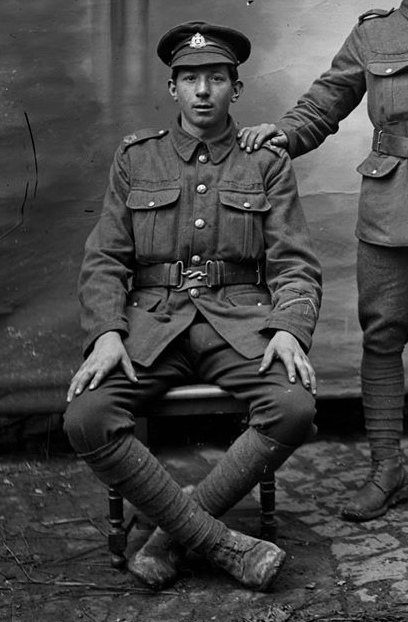
Thomas Edward Soloman Sharman was one of those killed in the attack against Ovillers that morning. A native of Lowestoft, he left behind a wife and three children. He was 27 years old. Before he went to France with the Battalion in 1915, he and his family had their photographs taken in a studio in Lowestoft. Thomas carried these photos with him whilst away on active service, whilst his wife had a second set at home. Thomas's body was never found.

With thanks to the Roll of Honour website for the image of Thomas Sharman.


"Looking As If He Had Been Suddenly Turned To Stone"

1/7/2016

 
Picture
Whilst one Suffolk Battalion had gone over in the first wave of the attack, another stood by in reserve in case they were called upon.
The day had dawned early for Sydney Fuller and his chums in 8th Suffolk. At 2.15am they were roused and issued with an additional 50 rounds of .303 ammunition in a bandolier and two extra Mills bombs which were stuffed into trouser pockets. The final tell tale sign that something 'big' was on that day was the tot of rum issued by the CSM at 5.30am.
The artillery had been pounding the German positions all of the night. As the dawn broke at around 4.15am, the artillery fire quickened. The dawn brought a fog that enveloped the Suffolk positions and settled on no mans land. The Germans, sensing that an attack might be imminent, began at first light to rake the fog with machine gun fire. At 7.30am, the fog lifted and Fuller noted "Our men went over. We being in reserve, stood to and awaited orders."
Fuller, as a Battalion Signaller was far to the right of the Suffolk position in a sap just out into no-man-land. From her he could see the French advancing near Maricourt, their "bayonet glittering in the sunshine" It was not long before the first of the walking wounded and prisoners began to appear in the Suffolk lines. "Smiling cheerfully at the prospect of a spell away from all this" wrote Fuller, then the prisoner emerged, as many as 20 at a time. Most bore the shoulder straps of I.R.190, I.R. 62 and I.R. 6. "
At 10.45am, the failure of the battle was evident and 8th Suffolk received orders to move up. The Brigade was held up infant of a redoubt and the Queen's Own Royal West Kent's were making no progress. 8th Suffolk were move to the rear of their positions and stand by. Moving out into the recently gained ground in a spread-out "Artillery Formation" the casualties began. An order was given to "Open Order" and spread out further, which did much to reduce the casualties; the majority of the shells and bullets firing in to the gaps between the men.
Keen to reach the safety of a trench, the men jumped down into a front line trench in the wrong position. No sooner were they in under cover, than they had to vacate the trench an mount the parapet again to get into a nearby communication trench. "We were greeted with a storm of enemy bullets, and had to get across in short rushes, lying down for a few seconds, rushing a few yards, down again, and so on until we reached Princes Street. We were now near our original front line, and immediately we got out of our trench and started across the open to the proper one, we were greeted with a storm of enemy bullets and had to get across in short rushes - lying down for a few seconds, rushing a few yards, down again, and so on before we reached Princes Street."
​The fire was immense and Fuller was hit my several shards of shrapnel that took chunks out of his steel helmet. A fellow comrade was shot eight times through the buttocks as he lye low in a shell hole. A German sniper made a concerted effort to shoot at his exposed body, yet despite this he still made the front line.
In the early afternoon, the enemy shelling decreased, allowing 8th Suffolk to move along the line to the left into a section that had been shelled continuously since early morning. "We passed along one of those "assembly" trenches. It had been heavily shelled by the enemy, apparently during the morning. Several of our men were lying dead in it, killed by the enemy's shells. In one place a man was kneeling, as if in prayer, his hands covering his face. Lying in the trench behind was another man, face downwards, half buried in the earth thrown into the trench by the shells. A short distance away was another man sitting on the fire-step buried to the knees, and looking as if he had been suddenly turned to stone. A little further along the trench I slipped on something, and looking down saw a piece of a man's backbone, and pieces of flesh strewn about the trench. Hanging down from the parapet, in the corner of the traverse, was a mass of entrails, already swarming with flies. And so on, here and there, along the trench, wherever shells had dropped in."
As afternoon wore into evening, the enemy retracted its heavy guns and shelling became more spasmodic. The Royal Engineers came forward to cut through the wire and obstacles to get a road as close to the front as possible. Still the wounded and prisoners came on, but now in fewer numbers as the day came to an end. News gradually filtered through that the allies had taken Montauban and Mametz that morning, so there was some call for celebration that the attack as far as 8th Suffolk could see in their sector, was partially successful.
As the night turned "fairly quiet" the Battalion snatched what sleep they could. Tomorrow they would move forward into the newly won ground. Was the day theirs? perhaps not in their eyes, but their sector had been one of the few success stories in a day marred with defeat for others.
It was however, the beginning of a long road that would eventually lead to an allied victory.

(I.R. = Infantry Regiment)

"We Left Our Trench To Tell Mr Germany That It Was Time To Get Moving"

1/7/2016

 
Picture
No sooner had the men of 11th Suffolk fanned out through the wire and started to get into position, than they began to fall.
Pte Senescall continues; 
"The long line of men came forward, rifles at the port as ordered. Now Gerry started and his machine guns let fly. Down they all went. I could see them dropping one after the other as the gun swept along them. The officer went down at exactly the same time as the man behind him. Another minute or so and another wave came forward. Gerry was ready this time and this lot did not get as far as the others."
The failure of the Brigade on the Battalion's left (102 Bde) to take the village of La Boiselle, meant that the Germans were able to pick off any men advancing through Sausage valley. The men still however pressed on. The War Diary noted “In spite of the fact that wave after wave were mown down by machine gun fire, all pushed on without hesitation though very few reached the German lines.”
This ‘polished’ view perhaps knocked the edges of a situation that was turning into chaos. Another patriotic account came from Major Brown commanding ‘A’ Company; 
“My very last memory of the attack is the sight of Gilson in front of me, and C.S.M. Brooks on my right, both moving as if on parade, and both a minute or two later to be mortally hit.”
There were however moments of success. Corporal Harley of March managed to get past the German front line and onto the land behind, but for lack of assistance, there was nothing more he could do "A great many of our Brigade not being bulletproof fell before they reached the German line, for the Germans were mowing the grass with machine gun fire. I managed to cross the enemy's front line, when I halted and looked around for my comrades. The nearest of them were about 50 yards away, so I thought I would wait for the reserves to come up. As I was standing there I felt something hit my left-hand top pocket, which reminded me I'd better move. I did so and a few minutes later a bullet passed through my left wrist."
By 8.00am, the fate of the battle was sealed for the Battalion. The intensity of the fire forced the men to ground. Those that could, sheltered in the shell holes, whilst the wounded lay all around on the ground. The grass; still high, shielded some of them from view and allowed men to crawl to shell holes for cover.  Pte Arthur Ransom in ‘A’ Company was getting ready to move forward with the reserve wave. As he reached the top of the ladder in the Cambs trench, he was it five times. Four bullets through the left arm and one in the chest. He fell back into the trench where he was dragged away as other Cambs Suffolk immediately mounted the scaling ladder. His part in the battle was over and within a week, he was in a hospital in Brighton recuperating.
Mid morning, a determined section attack was put in against the ‘Heligoland Redoubt.’ A section popped-up and ran determinedly toward the German positions in from of the strongpoint. Almost making the front line, a German flamethrower stopped them in their tracks. No man survived to retire.
Just after noon, a message was received at Battalion HQ by the Adjutant; Captain G.L. Tuck, that Captain O.H. Brown (‘A’ Coy) was in Wood Alley with around 20 men and around 200 men from other units in the vicinity. After rallying them together, they put up a shield of covering fire to the left flank that allowed assistance to be brought forward to collect the wounded and behind them in the area of the 21st Division, they did the same, assisting the Divisional HQ to retire safely.
As the afternoon wore on, any movement was dangerous. Pte Senescall recalled when the enemy’s artillery; “During the afternoon Jerry started shelling no mans land in a zig-zag fashion to kill the rest of us off. As each shell landed they gave a burst of machine gun fire over where it fell, to catch anyone who should jump up. As they worked towards me I knew when my shell was coming. Sure enough it came and landed a few yards behind me. Over came the bullets as well but I kept perfectly still. A very large shell fell some yards to my left. With all the bits and pieces flying up was a body. The legs had been blown off right to the crutch. I have never seen a body lifted so high. It sailed up and towards me. I can still see the deadpan look on his face under the tin hat, which was still held on by the chin strap. He kept coming and landed with a bonk behind me."
Finally after a full day out under the sun and being continually shelled and shot at, as darkness descended, the men in the forward shell holes and in no-mans-land began to crawl back to the Cambs lines. In the fading light, the German ventured out to assist the wounded. Pte Senescall again; "At long last evening came and the light began to fade. I ventured a look forward and there was Jerry out of his trench moving among the fallen. Now, I thought, I am going to Berlin too soon. That decided me, I jumped up and ran as best I could, for I was stiff. I kept treading on wounded and they called out to me for help. Jerry let me have a few more shots as I ran, but the light had now gone. Anyway he couldn't hit me that day in daylight, could he?(!)"
Another Cambs man, Pte John Garner from March, recalled “I was wounded at 4 o'clock and lay in a shell hole until midnight. I was shot while holding my bottle to a wounded Scotchman when the bullet entered my wrist and came out at the elbow."
The casualties sustained that day by 11th Suffolk were the highest of any Battalion in the 34th Division. 691 all-ranks including 19 officers. Of these 190 were killed on the first day and 337 were wounded. More men would die as a result of wounds received in the days that were to follow.
Of the 190 killed above, a staggering 148 have no known grave and are commemorated on the Thiepval memorial. 
​1st July 1916 was a black day for the 11th Battalion, but like its counterparts in the 2nd, 1st, 5th and 9th Battalion, it could, and would be reborn again.

<<Previous
    Picture
    Welcome to our online 'chronicle' that charted the history of the many battalions of the Suffolk Regiment throughout their service during the Great War.
    This record is now closed, but we have retained all our original posts here for you to search through and in the fullness of time, we hope to add to it as and where new stories come to light.
    It was at times, a challenging but rewarding endeavour which has helped many people in their research of the Regiment.
    If you know the specific month of an action of the Regiment, you can search for it in the list below:


    Archives

    February 2025
    December 2018
    November 2018
    October 2018
    September 2018
    August 2018
    July 2018
    June 2018
    May 2018
    April 2018
    March 2018
    February 2018
    January 2018
    December 2017
    November 2017
    October 2017
    September 2017
    August 2017
    July 2017
    June 2017
    May 2017
    April 2017
    March 2017
    February 2017
    January 2017
    December 2016
    November 2016
    October 2016
    September 2016
    August 2016
    July 2016
    June 2016
    May 2016
    April 2016
    March 2016
    February 2016
    January 2016
    December 2015
    November 2015
    October 2015
    September 2015
    August 2015
    July 2015
    June 2015
    May 2015
    April 2015
    March 2015
    February 2015
    January 2015
    December 2014
    November 2014
    October 2014
    September 2014
    August 2014
    July 2014
    June 2014
    May 2014
    April 2014
    March 2014

Powered by Create your own unique website with customizable templates.
  • Introduction
  • History
    • Our Regimental 'Family'
  • Publications
  • Archives
    • Operation 'Legacy'
    • Friends News Archives
    • Battlefield Tours
  • Join Us
  • Friends News
  • Contact